
sonic the hedgehog was accidentally luddite propaganda
"yo, Ro-butt-nik! that was for Cat!" - Jaleel White

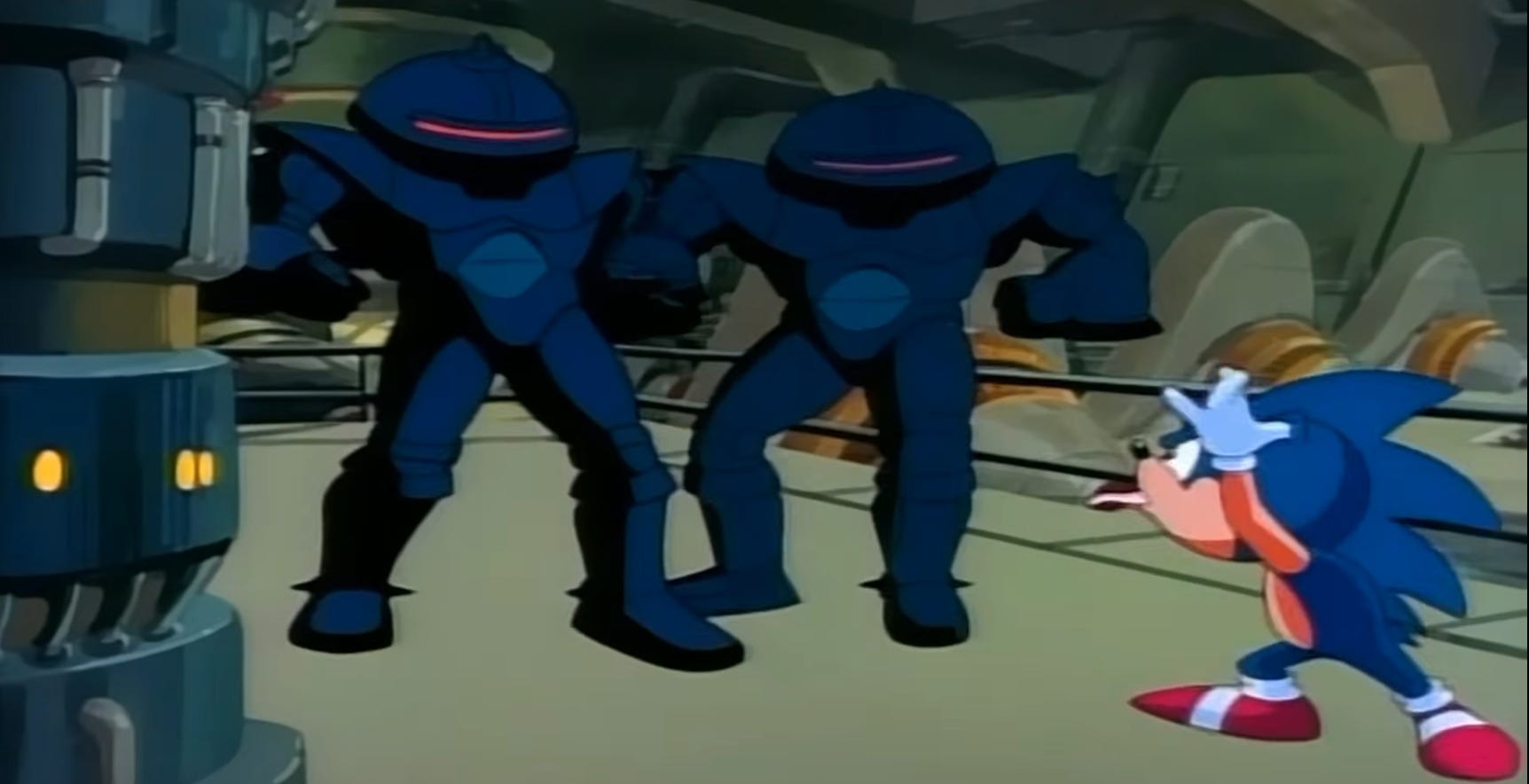
Yes, Sonic the Hedgehog, SEGA’s iconic blue mascot and main character of questionably awful and incredible games since 1991, was overt luddite propaganda until the release of Sonic Adventure in 1998. To even a casual player, the classic 2D games clearly outline an end goal of trapping & demolishing robots which threaten the natural life. This bled through into Sonic’s lesser-known IPs, such as the cartoons or the corresponding 150+ volumes of the Archie comics. While the Sonic team’s attitude has certainly shifted, the messaging of the early Sonic media resounds differently when applied to today’s attitude towards technology and the neo-luddism movement.
If someone is referred to a luddite in modern day, it likely negatively depicts someone who is against technology and thus, change. This term stems from a specific reactionary movement of the 19th-century English working class; textile factories introduced automated lace framing machines which rendered twenty thousand workers out of a job. Across England, enraged workers created a decentralized underground network with the goal of breaking into factories and physically tearing apart the machines replacing them. The Luddites portrayed themselves similar to local legend Robin Hood, operating behind the scenes and exchanging letters addressed to symbolic leader “General Ludd” hiding in Sherwood Forest. Many of the workers possessed a sophisticated understanding of which machines specifically would make goods high quality enough to compete with those made by workers who had gone through an apprenticeship and were paid appropriately. This movement resulted in unprecedented bloodshed and animosity between factory owners and workers; parliament ruled that machine-breaking was a capital offense in the Frame Breaking Act of 1812, and Luddite actions soon resulted in executions, exiles, and open fire into crowds. With their history written by the victorious industrialists, Luddites got the reputation of being an unsuccessful force of inept workers trying to resist progress, and many today perceive them as the failed final line of defense for a pre-technology way of life. In actuality, the Luddites were more anti-corporate than they were anti-technology, and their resulting rage against the machines sent a clear message to the factory owners about replacing their livelihoods. Their unfortunate story is one of unethical replacement, networked retribution, and devastating reaction. 12
Beyond the scope of corporate control over workers rights, destroying the very machines replacing and harming natural life is integral to the plot of the early Sonic video games. Throughout Sonic 1, 2, 3 & Knuckles, and CD, antagonist Dr. Robotnik/ Eggman captures small animals, such as birds, rabbits, or squirrels, to serve as organic batteries inside his Badnik robots. By destroying the robots, Sonic releases the creatures back into the wilderness and restores the natural order of the island. In Sonic 2, Sonic teams up with Tails the Fox, a mechanic, in order to fix up his plane to add a missile to defeat the final boss. In Sonic CD, Sonic faces against a metal version of himself and has to outperform & severely damage the robot in order to get the good ending of the game. Admittedly, beating robot enemies is a fairly common game mechanic, but the replacement, competition, and resulting destruction of machines interfering with natural life at least resembles Luddite actions.
A more blatant connection is explored in the TV show Sonic the Hedgehog (aka Sonic SatAM) and the corresponding issues of the Sonic Archie comics. The “Freedom Fighters” movement depicted in this story arc is strikingly similar to the Luddite movement, and although this arc exists outside videogame canon, this official Sonic media has a very clear message about rebellion against destructive technology.
The Freedom Fighters story of SatAM begins with Sonic and his team, consisting of Princess Sally Acorn, Rotor the Walrus, Tails the Fox, Bunnie Rabbot, and Antione D’Coolette, actively sneaking into Robotnik’s factory where he holds the ultimate weapon, the roboticizer, a machine capable of permanently transforming characters into enslaved, mindless robots.
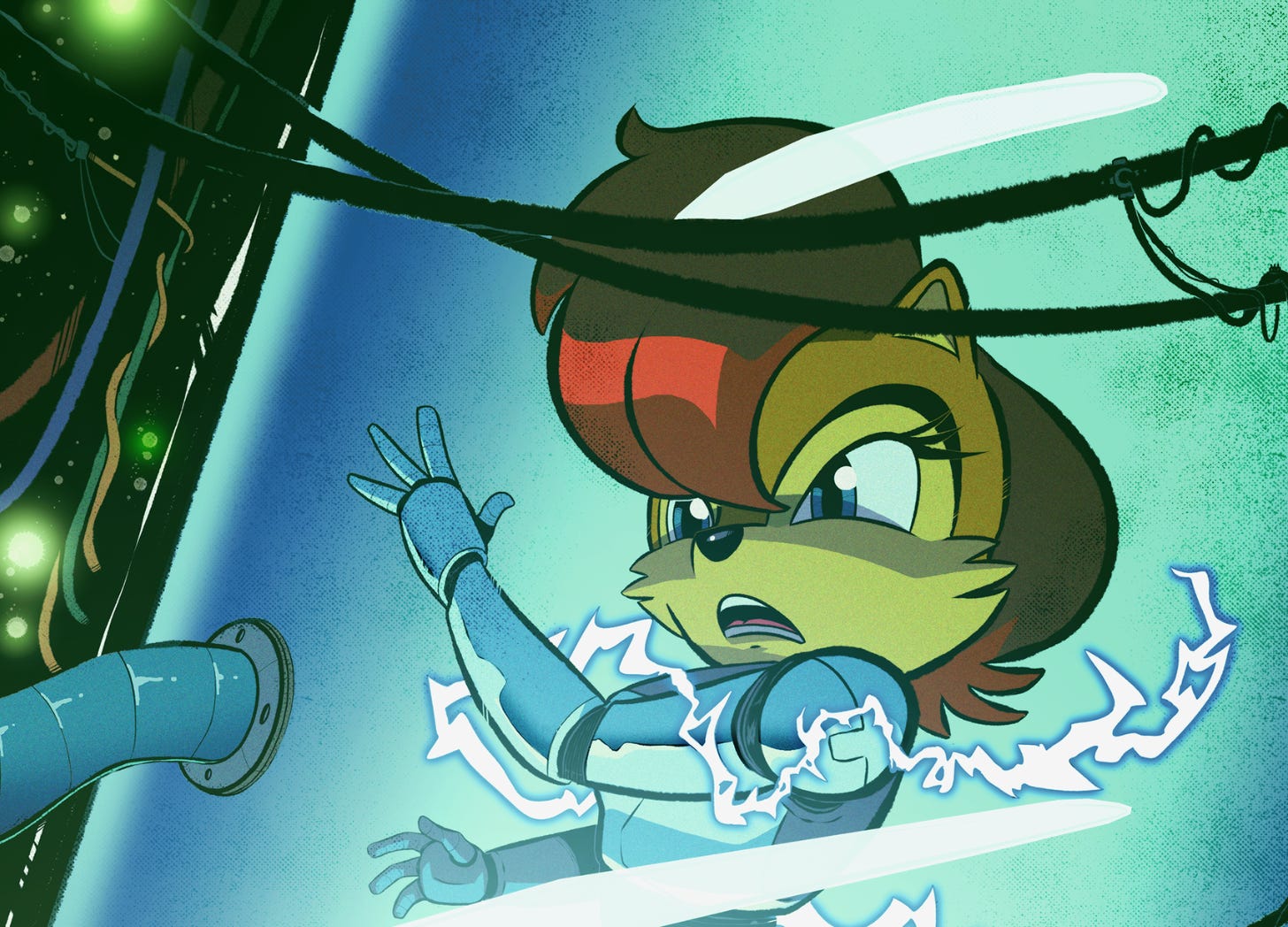
This literal replacement of human (?) life is surprisingly dark for a Saturday morning cartoon. Not only is this an existential threat to the main characters, but Sonic and company experience legitimate grief over the loss of their friends and loved ones after roboticization. The first episode concludes with Sonic grappling with a failed rescue of a fellow Freedom Fighter. When the rescue team escapes unharmed, they blow up stealth fighter jets and exclaim “that was for Cat!”3 The victims of the roboticizer are plentiful–including Sonic’s mother, father, and Uncle Chuck–and Sonic is shown having nightmares of his friends being taken and roboticized. The stakes are truly life-and-death, and the show immediately establishes a narrative in which the Freedom Fighters are the cool, exciting rebels and Robotnik is a tech-wielding dictator.
Due to Robotnik’s takeover and transformation of the kingdom Robotropolis, Sonic and company are exiled into the surrounding forest, where they occupy a hidden safe haven called Knothole. This location is a mystery to Robotnik, and many episodes center on the protection of Knothole from enemy discovery. It is here they create an underground network with the explicit goal of destroying Robotnik’s factories and the roboticizer. The natural design of Knothole starkly contrasts the dark, metallic environment of Robotropolis, and to a young viewer, this communicates on a simple level that nature is good and Robotropolis is bad. However, the Freedom Fighters are not by any stretch anti-technology; they only aim to eliminate the threat of robot takeover in order to preserve civil and natural order. Main characters use technology every episode to try and make progress; Sally uses an AI smartphone referred to as Nichole, Rotor and Bunnie are mechanics, Bunnie is partially roboticized, and Sonic himself utilizes a magical ring developed by his uncle as a speed boost.
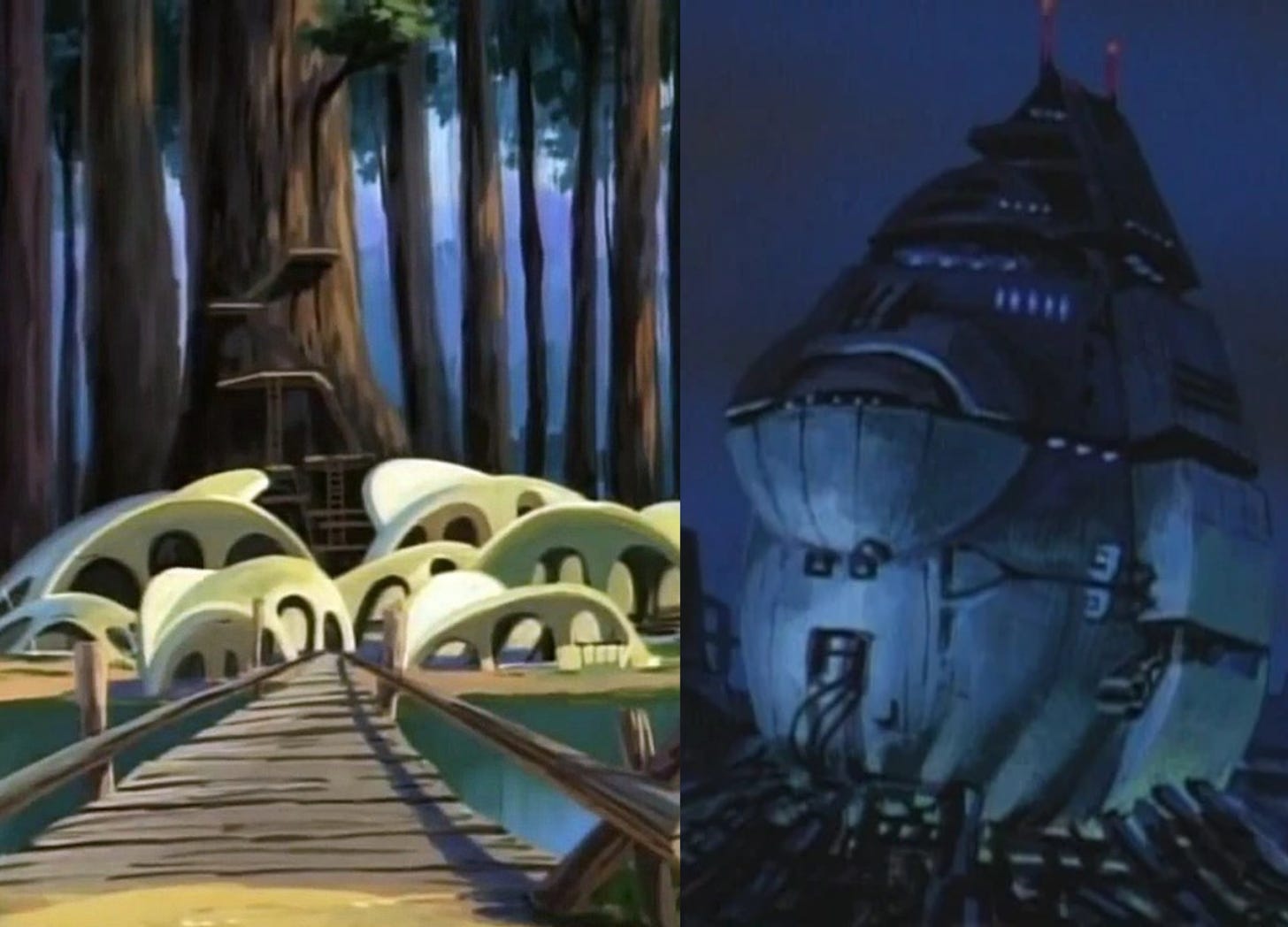
By the final episode of Sonic SatAM, the Freedom Fighters are able to utilize and ancient technology to destroy Robotnik’s Doomsday device, the roboticizer, and much of Robotropolis. Wildly, the show suggests that the resulting explosion kills Robotnik, which on a personal note, is crazy for a kids show and is only one of two canon occasions in which Robotnik is killed. The show was cancelled after the second season, but the final episode ends on a cliffhanger with hints of a new villain. The fight continues.
Several clear correlations between the Freedom Fighter and Luddite movement stand out: an industrial revolution disrupting livelihoods, physical retribution against specific, problematic machines, genuine peril and grief over industrialists’ reaction to the movement, even the underground network’s characterization of itself as a Robin Hood-like camaraderie. Interestingly, even deeper connections exist to the Luddite movement as well: royal involvement in balancing innovation against the welfare of its citizens, the secret meeting location in the woods, and the taunting attitude many protestors adopted against their malefactors.
Luddites commonly attacked a knitting machine called a stocking frame, which had been developed in 1589 by William Lee (200 years prior to the movement.) It was refused a patent by Queen Elizabeth I, and legend states that the queen denied it out of fear that it would displace traditional hand-knitters.4 Luddites did not attack the original invention because it existed; they were reacting to the later changes to the machine which made it more useful to employers looking to make more money. In the Sonic universe, the roboticizer is revealed to have been invented not for malicious purposes, but by Uncle Chuck, a knight of King Acorn, to help older people live longer. Uncle Chuck destroyed it shortly after production because it took away the user’s autonomy, but Robotnik stole the plans, made changes, and developed it himself. Further, it was Robonik acting as King who enacted the wave of roboticizations as punishment.
Sherwood Forest, while a real location in Nottinghamshire, England, is famously home to a tree which legend states provided a hideout for Robin Hood and his Merry Men. Primary sources of Luddite letters are signed “General Ludd’s Office, Sherwood Forest”, and Luddite historians argue these signatures were part of a carefully constructed bureaucracy which mocked official government language and concealed local organizers.5 The secret location of Knothole in Sonic SatAM (which as a term means part of a tree) acts similarly both by protecting the secret society within and serving as an untraceable location. Notably, this could be a correlation between the Freedom Fighters and Robin Hood, not the Luddites specifically, but the goal of the Freedom Fighters aligns with the Luddite movement.
Lastly, Luddites led very serious protests while conducting themselves with an aire of sass and mockery. Famously, two men dressed as women called themselves “General Ludd’s wives” and led thousands of demonstrators through the town attacking manufacturers’ property.6
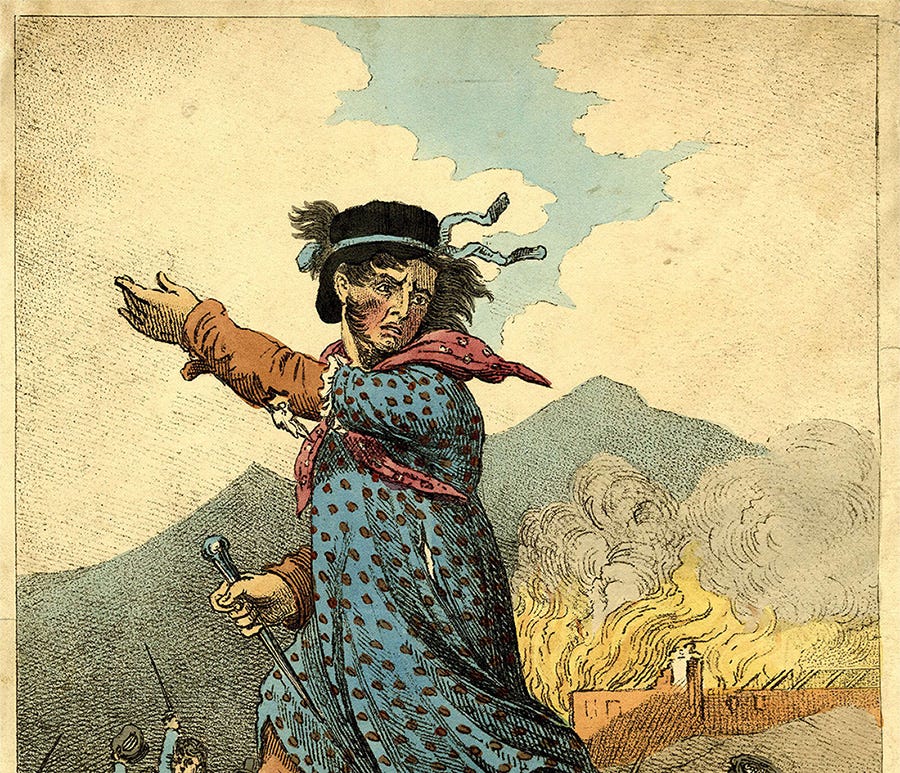
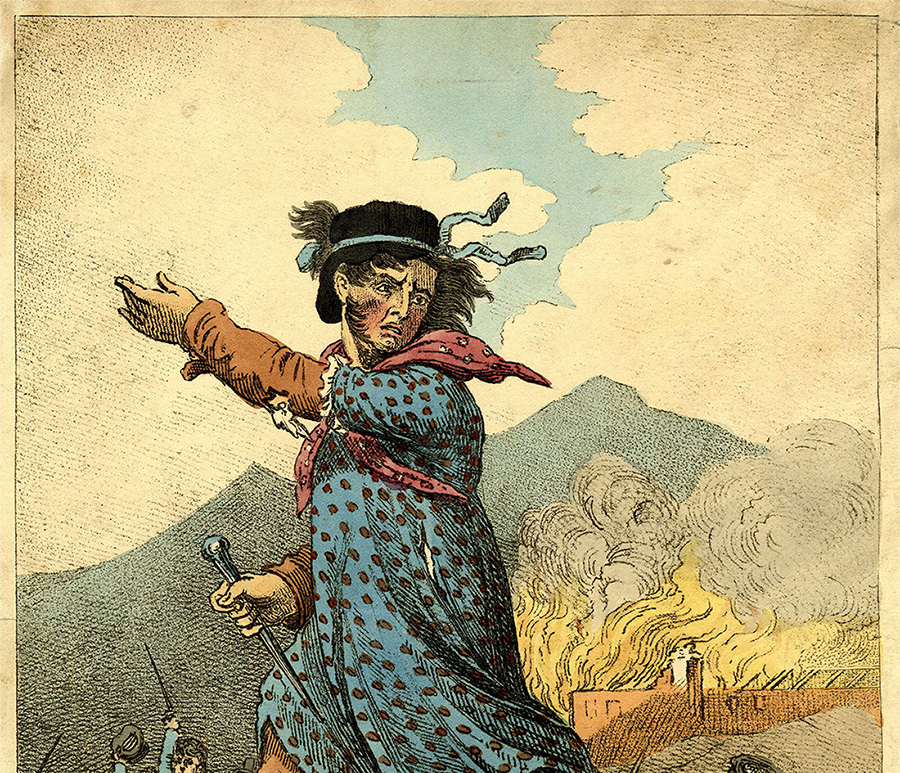
This cross-dressing was not simply disguise; it drew on a long British tradition of “world turned upside down” protest, where rioters temporarily inverted social norms to ridicule authority. This symbolic language was used to unite supporters and intimidate opponents. Historian Richard Jones describes how “they were engaged in a kind of semiotics…They took a lot of time with the costumes, with the songs.”7 Sonic’s ridicule of Dr. Robotnik not only frustrates the guy, but he is sometimes so overwhelmed with anger that he destroys his own machines.8 I’ll leave it there.
When the Sonic franchise released its first 3D game in 1998, Sonic Adventure, everything about Sonic changed dramatically, from his design to the mood of the story. Future plot relied more on the magical force of the Chaos Emeralds to drive gameplay, and robots no longer use animal life as power. This is likely responding to the social shift towards new technology of the early 2000s, and Sonic’s character is built on being cool and with the times.
I noticed the similarities between the Freedom Fighters and Luddites when I began questioning the use of more advanced technologies in my own life. As an audio engineering student, I learned how the shift towards streaming music not only diminished the artist’s ability to make a livelihood, but it robbed me of a great final product a qualified producer took hours to accomplish. It was then I learned of the Luddites and wondered why their story felt so familiar. Only a human could make the connection that the Sonic TV shows she grew up watching may have, in fact, accidentally skewed her opinion of progress-for-the-sake-of-power technological advances. And finally, like the ending of Sonic SatAM, the fight persists!
Conniff, Richard. “What the Luddites Really Fought Against.” Smithsonian Magazine, March 2011. https://www.smithsonianmag.com/history/what-the-luddites-really-fought-against-264412/.
Park, Joseph. “The New Luddites.” Digital Architecture Lab, April 5, 2024. https://dalab.xyz/en/blog/the-new-luddites/.
All Sonic SatAM episodes are available on YouTube & credit to the production team is at the end of each episode.
The fact that the patent was denied is well documented, but the Queen’s quote, “It would assuredly bring them ruin…”, and reasoning is debated among historians. However, British historian Joan Thirsk outlines in her book The Rural Economy of England that the Crown intervened in markets to preserve employment and avoid social unrest.
Binfield, Kevin, ed. Writings of the Luddites. Johns Hopkins University Press, 2004.
This event is described at length in Kirkpatrick Sale’s Rebels Against the Future and in an 1812 political print depicting the “leader of the luddites” wearing a woman’s bonnet, dress, and armed with weapons before a crowd.
Thompson, Clive. “When Robots Take All of Our Jobs, Remember the Luddites.” Smithsonian Magazine, January 2017. https://www.smithsonianmag.com/innovation/when-robots-take-jobs-remember-luddites-180961423/.
I can’t stop laughing- why am I doing this?? This is an example of something AI could never have imagined in its dizziest daydreams, and I am proud of that.